
From Risk to Integrity: Two-Day Seminar on Strengthening Local Governance in Armenia Held in Yerevan
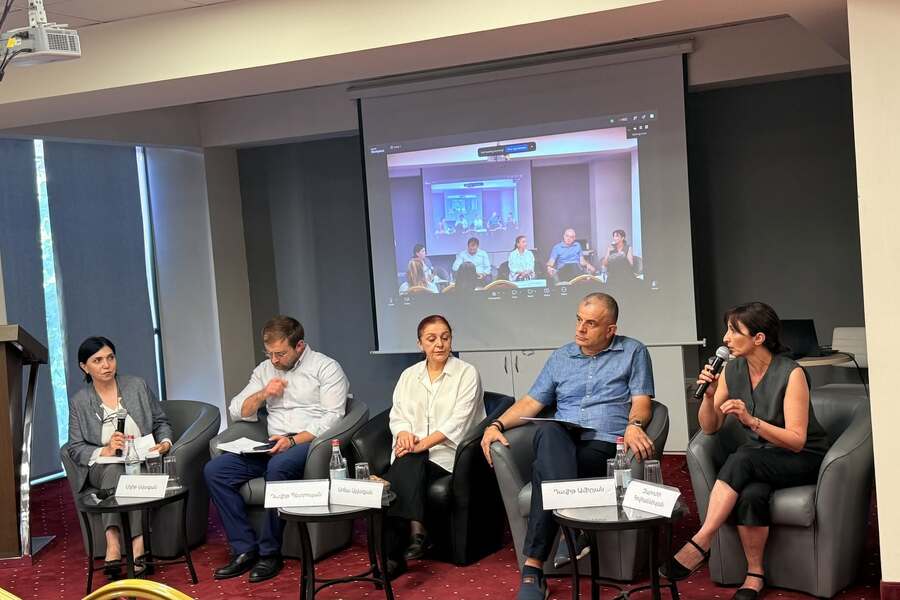
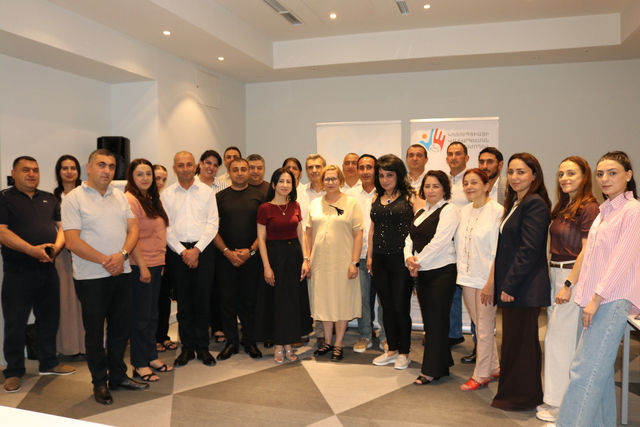
On 22–23 June 2026, Transparency International Anticorruption Center (TIAC) organized the first in-person seminar within the frames of the “From Risk to Integrity: Strengthening Local Governance in Armenia” project. The event brought together representatives of selected communities as well as Estonian and Armenian experts to discuss practical approaches to identifying and addressing corruption risks at the local government level.
The project is implemented by TIAC with the support of the TI Estonia and ESTDEV - Estonian Centre for International Development and in cooperation with Corruption Prevention Commission. It aims to support anti-corruption reforms in Armenia’s local self-government system by introducing a corruption risk assessment methodology adapted to the Armenian context.
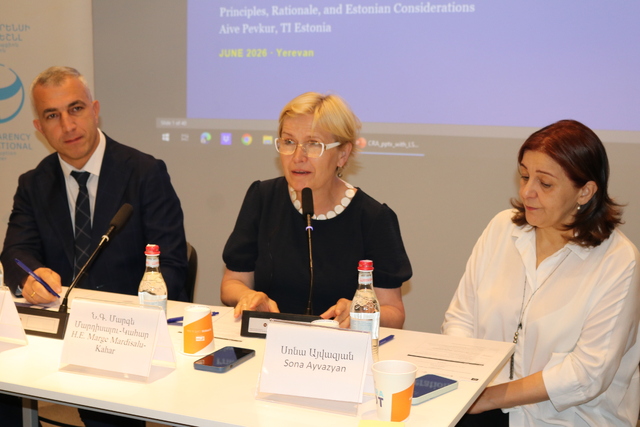
The seminar opened with welcoming remarks by H.E. Marge Mardisalu-Kahar, Ambassador of Estonia to Armenia; Sona Ayvazyan, Executive Director of Transparency International Anticorruption Center; and Aramayis Pashinyan, Member of the Corruption Prevention Commission. In their remarks, the speakers emphasized the importance of integrity, transparency, and institutional capacity-building in local governance, as well as the value of international cooperation in advancing anti-corruption reforms.
A key part of the first day was dedicated to the presentation of the Estonian experience by Aive Pevkur, expert of Transparency International Estonia, who introduced participants to Estonia’s practices and lessons learned in promoting integrity and preventing corruption. The seminar then continued with the presentation of the workshop objectives, expected results, planned activities, and the methodology for assessing corruption risks in the local self-government system. This session was led by Armen Khudaverdyan, Public Administration Consultant at TIAC, and Tatev Asryan, Head of the Corruption Risk Assessment Department of the Corruption Prevention Commission.
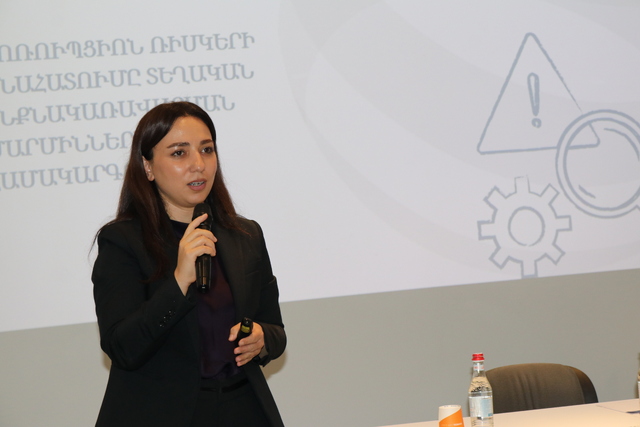
During the practical sessions, participants worked with the locally adapted corruption risk assessment questionnaire, discussing how it can be applied in practice, what types of risks may arise in local governance processes, and how communities can use assessment results to design more effective integrity and anti-corruption projects. The second day was fully dedicated to practical work around the questionnaire, allowing participants to further review and test the tool, discuss its relevance to their communities, exchange views, and better understand the role of corruption risk assessment in improving local governance.
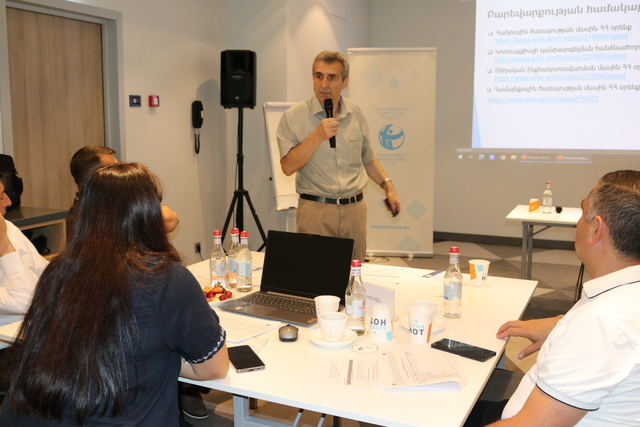
The workshop concluded with a summary session, presentation and discussion of next steps, and the awarding of certificates to participants. The closing session was led by Armen Khudaverdyan, Tatev Asryan, and Aive Pevkur. The seminar marked an important first step in introducing a structured, locally adapted approach to corruption risk assessment at the community level in Armenia.
The project contributes to strengthening integrity promoting transparency, and supporting more accountable local self-government.