
Comments on draft adjustment to Yerevan master plan on "CivilNet"
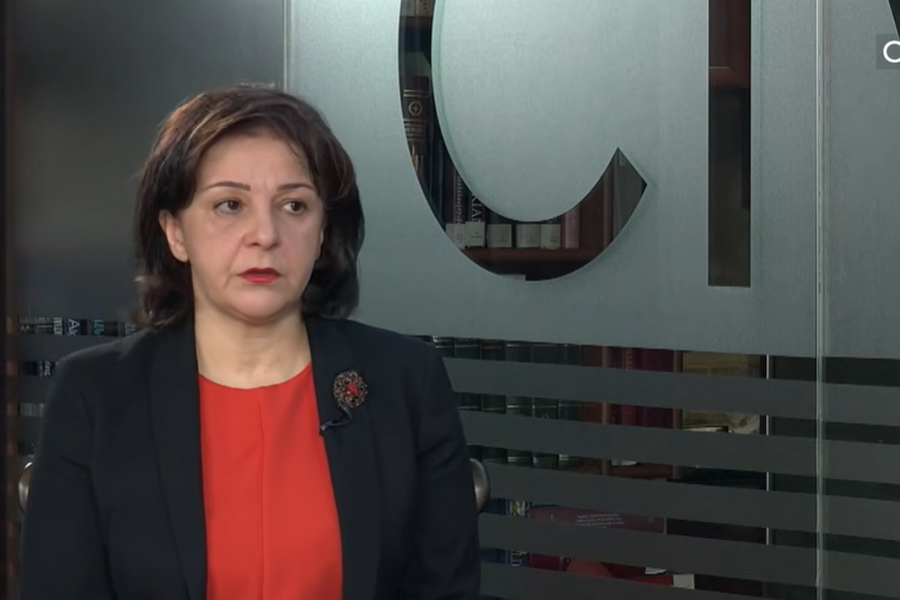
A public discussion on draft adjustment to Yerevan master plan organized by Transparency International Anti-corruption Center (TIAC) jointly with Yerevan Municipality and "YerevanProject Institute" CJSC found response among interested public, and as a follow-up Sona Ayvazyan, TIAC Chair who was the guest of "CivilNet" TV on its October 4 show came up with comments about it. The issues of interest to the organization are public green areas and cultural and historical monuments of Yerevan.
Designed by YerevanProject Institute, Yerevan master plan does not in itself pose a problem for TIAC. It is draft master plan implementation that is of concern for the organization. The experience shows that the drafts as a rule remain on paper, whereas their implementation process works independently, causing illegalities or arbitrariness. It resulted in having a document, which was not initially drafted. The primary aim of the discussion organized by TIAC was raising awareness of and give opportunity to the interested public to express their opinion about draft adjustment to Yerevan master plan. The recommendations presented by them will be summed up by TIAC and submitted to the consideration of the team of designers, Yerevan municipality, the bodies, which conduct expert examination and to the Armenian government, which will endorse the document.
In reply to the claims made on the internet regarding the seemingly worthless existence of the master plan because of its recurrent amendments and adjustments and legalization of illegal constructions, Sona Ayvazyan gave the following explanation. Two parallel processes take place. On the one hand the citizens act arbitrarily ? carry out illegal constructions. Afterward perhaps due to corruption processes the illegalities become legal. On the other hand, the government, which is entitled to discretionary authority of decision making abuses it for instance, by allocating areas without tender, changing its special purpose or recognizing some areas as eminent domain. Numerous cultural and historical monuments were demolished because the government proclaimed some areas in the center as eminent domain.
The special purpose of some areas was changed within the period between adopting the master plans. The government in fact amends the master plan, however those amendments do not follow the same procedure as the master plan's adoption process. The fact is of concern since the government never precisely justify the process, which as a rule remains in secret, unrevealed or unexplained.
In the opinion of Sona Ayvazyan there is a need for legislative amendments ? the government needs to be deprived of some discretionary decisions or at least decision making process should become more complex and should face higher requirement for justification. The demand for eminent domain should lay in the base of master plans, that is the master plan should show that a certain area needs to be repaired and exclusive public demand of alienation can be proclaimed there to alienate the area, naturally with due compensation to its owner. The illegalities may be stopped in those cases. Though some provisions are found in legislation they fail to be duly implemented.
According to Sona Ayvazyan, the NGOs, especially those working in the mentioned spheres should be more concerned, should become more professional in the sphere and should get acquainted with those processes more closely, since even the NGOs operating in the mentioned spheres are not well aware of the legislation, procedures, and are unable to act as a full claimant of public demands in cases the public should claim justifications and explanations from the government.
Though the citizens have become more active and are much more concerned today, it mainly refers to the cases of illegal construction in the areas of their residence, the cases when the citizens become victims and they begin to fight themselves against some construction processes. In those cases, they become more active themselves and begin to fight. Those who become more active begin to be interested in other problems as well, which may be natural. Nevertheless, it would be more desirable that people get interested not only in the problems of their area but also the problems of their community and city as well.
The current draft shows respective surfaces of green areas intended for 2020, since it includes the period up until 2020. However, the content of the surfaces colored green are not green in itself that is there are many constructions there. According to urban development norms there should be 20 percent construction and 80 percent greenery in the green areas of general use. However, today we face the contrary: there is about 80 percent construction and 20 percent greenery. Today we work for the surfaces that are colored green in the draft to become really green. It is possible to do if there is political will. For instance, one may not extend the contracts with those constructors whose terms expire. There are numerous constructions in Kentron community, whose contracts should be expired in 2011, 2012, 2013 and there is no need to extend their contract terms. The cafes in the green areas, e.g. in the area of the Opera or Oghakadzev park should be dismantled, guided by the same logic and the same explanation as the traders' stalls were dismantled in the streets because their contracts were expired. Simply one should dismantle gradually and return the area to the public - its real owner.