
Details of voting after elections
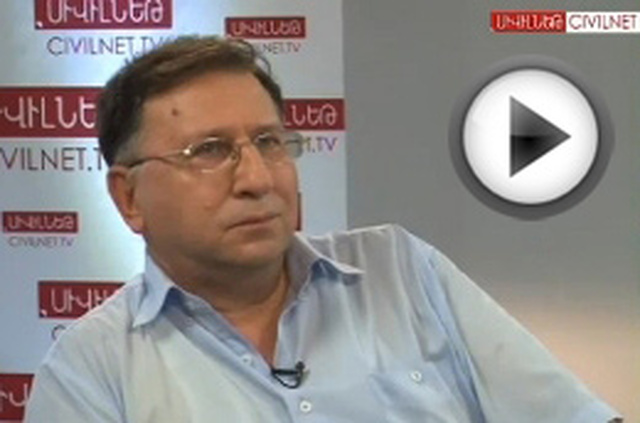
On May 30, 2012 Varuzhan Hoktanyan, Executive Director of Transparency International Anti-corruption Center (TIAC) and Lusine Hakobyan, Attorney, President of Europe in Law Association were the guests of CivilNet's "The Angle" show. During the show, the guests addressed registered violations affecting the process and results of parliamentary elections held in Armenia on May 6, their consequences, and assessments that found reflection in Election observation report drawn up by observer delegation of the Parliamentary Assembly of the Council of Europe.
TIAC has implemented a number of projects on 2012 parliamentary elections, including monitoring of election campaign finance and misuse of administrative resources and electronic monitoring by voting numbers-based method. As for the first, data processing is underway. It will be presented to the public as soon as the findings are ready.
The application of voting numbers-based method enables to expose the situations that imply risks of potential violations. Due to it the study may be used by party proxies and observers as a very serious argument to appeal the election results soon after the elections (which, unfortunately was not used during these elections).
The situations that imply risks of potential violations are as follows: excessive number of voters on the voter lists, high turnout of voters in certain polling stations during certain period of time and too many inaccuracies in a number of polling stations.
In case of exaggerated voter lists when the number of voters in a given community is approximately equal to or more than the number of permanent population, the risk of violations implies that there may either be great number of fictive voters on the voter lists (with false first and second names) or despite leaving the country, a number of voters may still be on registration lists. In that case, there is a danger that election fraudsters may vote instead of the mentioned "ghost" voters.
As for voter turnout, based on turnout of voters announced by Central Electoral Commission in every 3 hours, the voting process in many places was held amazingly quickly, i.e. a voter may have voted in 20 seconds on average. Potential risk may be posed by announcing not authentic data from precincts. By neutralizing "unwanted" proxies and observers, with the help of precinct election commission members under their control, corresponding signatures may be added to get not authentic but desirable numbers.
After posting the tabulated protocols on CEC website TIAC analyzed inaccuracies of numbers in protocols, by the way not only those inaccuracies specified by Electoral Code but also those ones that according to the code shall be recorded as "0." The calculation results of the latter enabled to reveal the precincts where "carousel voting" has likely occurred.
Visiting "2012 parliamentary elections: voting number-based analytic calculation" web page on TIAC website will enable to get acquainted with the above mentioned data.
PACE election observation report on parliamentary elections in Armenia was published on May 24, 2012. The concerns addressed in the report were those that caused anxiety among Armenia's independent structures involved in observing or simply monitoring of elections. In the opinion of Varuzhan Hoktanyan that rather objectively written report is a political document, which may have political impact, i.e. Armenia will continue to remain under monitoring regime. Oftentimes such elections may further weaken Armenia's foreign policy stance. Therefore, we need to hold normal elections taking into account foreign policy challenges that Armenia faces. Another report being more seriously accepted by international community will be OSCE/ODIHR report, which may result in serious political pressures.