

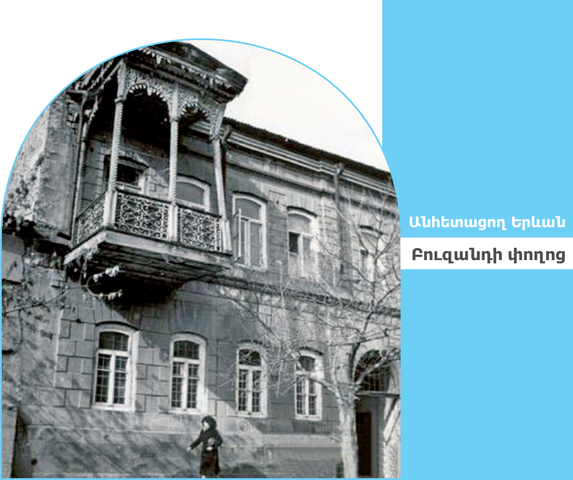
Disappearing Yerevan: Buzand Street
Yerevan sometimes loses its identity—stone by stone, house by house. One of those losses is Buzand Street, once a cozy and historic part of the capital’s heart, and for a time, one of Yerevan’s calling cards. The street was once lined with houses built as early as the late 19th century, notable for their unique architecture, memory-laden walls, and officially recognized as cultural monuments. Yet even that status and the legal protection that came with it did not prevent their disappearance.
In the 2000s, as in many other parts of old Yerevan, Buzand Street witnessed mass demolition. Numerous laws intended to protect cultural and historical heritage were violated, and the spirit of old Yerevan gave way to the uniformity of new developments.
Among the demolished buildings was the house of Hovhannes Ter Mkrtchyan—an architecturally significant structure. In 2004, by decision of the Armenian government, the house was dismantled with a promise that it would later be reconstructed in a different location. However, that promise remains unfulfilled to this day. The fate of Ter Mkrtchyan’s house, like that of dozens of other historic buildings, remains uncertain—they continue to wait for the moment they can reclaim their place not only in the city’s physical landscape but also in its memory, culture, and identity.
TIAC’s online database presents the fate of 94 historic buildings, documenting their past, architectural value, legal status, and preservation challenges.