
From Warsaw to Vilnius: electoral standards
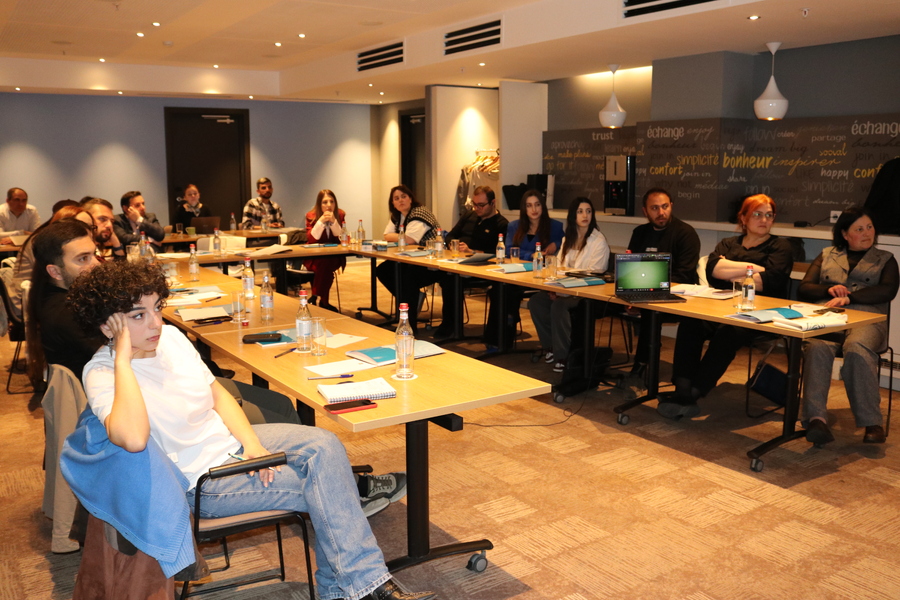
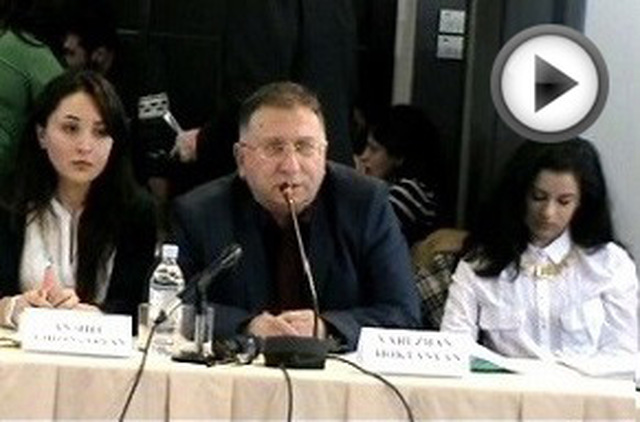
On November 22, 2013 Varuzhan Hoktanyan, Executive Director of Transparency International Anticorruption Center took part in Public Discussion "From Warsaw to Vilnius: at the crossroads - Armenia and Georgia" and made presentation on "Electoral Standards." He presented TIAC report, which was based on the analysis of the key elections held in the 2012-2013 electoral cycle: 2012 parliamentary elections, 2013 presidential elections, and 2013 Yerevan City Council elections identifying the key issues and factors that had a major impact on the election's outcome. He came to the conclusion that integration into European civilization is impossible without free and fair elections. Thus, it is necessary to have genuine dialogue with EU to improve the current situation.
In the countries with systemic corruption, (misfortunately in Armenia as well) it is natural for political corruption to be markedly manifested during elections. In the classic sense, corruption is manifested when the ruling political power try to achieve its desirable goal by extensive misuse of administrative resources. If in 2012 and 2013 soft violations were widespread in Yerevan city council elections, hard violations manifested by abuse of administrative resources prevailed during presidential elections.
Mass vote buying played greater role in 2012 parliamentary and 2013 Yerevan city council elections in order to get the desired result. More hard violations, including instances of ballot box staffing occurred during presidential elections. First of all, it was the issue of voter lists that had major impact on the outcome of elections in all three mentioned elections. Since the Electoral Code does not allow to publish the voter lists after elections it is impossible to expose whether the people voted for themselves or it was others who voted instead of them.
Another important problem was the issue of professionalism or lack of political will of the election commission, in particular, precinct election commissions (PEC). The formation of PECs and peoples involvement in it is a rather serious concern. The observers and proxies also are of problem. Election precincts were full of observers who failed to see violations and thus neutralizing those who saw them.
Vote buying played great role in all three elections. It is important for law enforcement bodies to manifest proactive attitude, whereas it is those who exposed the violations that bear the burden of proof in case of vote buying exposure. In the hierarchic system of governance, the superiors have power over their inferiors to ensure certain votes to be cast for the rulers. Thus, provincial governors have power over village mayors, provincial governors offices - over municipalities and employees of government offices, school principals - over the teachers making to ensure certain number of votes. This corrupt mechanism played major role on election outcomes.
Formalistic approach toward complaints and appeals is of serious concern. It did not permit for superior election commissions and administrative court to provide unbiased study of violations.
In the end of his speech, Hoktanyan posed the following question: why wasnt government power transferred through elections after 1990? It is a corruption related matter: how adequate is the institute of election and all institutes that are created to ensure democratic development of the country if "entrusted state power is used for private gain" approach prevails?